A hypersonic wind tunnel in China now pushes airflows to Mach 30, a regime where vehicles face plasma sheaths and extreme shock-layer heating. The facility places China at the frontier of controlled experiments that simulate reentry and long-range hypersonic flight far beyond current U.S. ground-test capabilities.
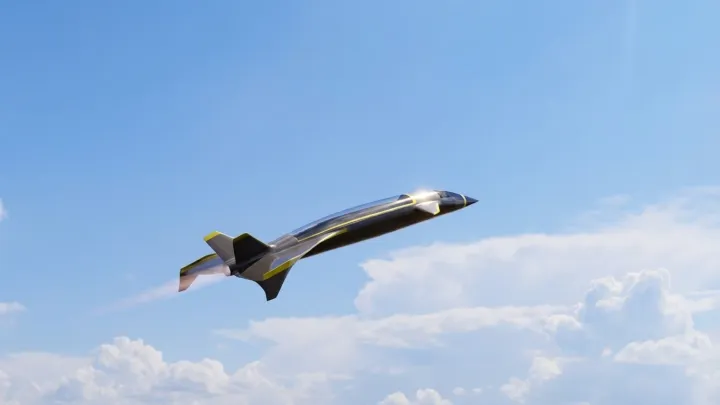
At such velocities, compressible flow and aerothermodynamics dominate design choices, as engineers must manage boundary-layer transition, thermal protection systems, and guidance control under intense dynamic pressure. A tunnel that reproduces these conditions allows rapid iteration of glide body shapes, nose cones, and control surfaces without waiting for costly full-scale flight tests.
The new tunnel effectively reduces uncertainty in computational fluid dynamics models and provides a high-fidelity sandbox for studying flow separation, shock–boundary-layer interaction, and material ablation. For defense planners, that combination of data and test throughput acts as a strategic force multiplier, tightening the feedback loop between simulation, prototyping, and deployment in the hypersonic domain.