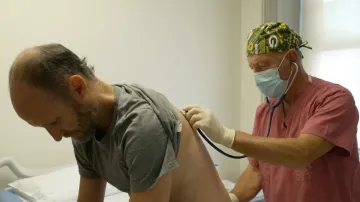
Colonoscopy suites, pathology slides and survival curves all point to the same conclusion: everyday choices can tilt the odds for colon cancer long before any symptom appears. A colorectal cancer doctor describes five behaviors he deliberately avoids, not as abstract theory but as patterns repeatedly visible in clinic, imaging reports and tumor boards.

He refuses to skip colonoscopy when screening is due. Adenomatous polyps are a textbook example of a precursor lesion; removing them interrupts the adenoma–carcinoma sequence and changes absolute risk in a way no symptom-based approach can match. He also avoids frequent processed meat, where nitrosamine formation and chronic mucosal irritation correlate with higher incidence in epidemiologic cohorts.
He does not ignore persistent rectal bleeding or altered bowel habits, because delayed evaluation lets dysplasia progress to invasive disease. To protect the gut microbiome, he avoids unnecessary broad-spectrum antibiotics and ultra-processed foods that promote dysbiosis and low-grade inflammation of the colonic mucosa. Finally, he treats visceral obesity and sedentary living as modifiable carcinogenic terrain, given their links to insulin resistance and elevated insulin-like growth factor, both central to colorectal tumorigenesis.
For this specialist, prevention is not a slogan but a sequence of small refusals, repeated over time, against a disease that usually begins in silence.