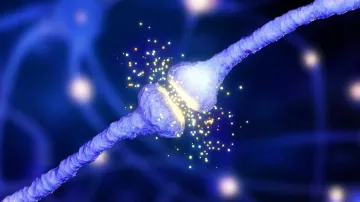
A dense mosaic of brain images is beginning to redraw the map of what psychedelics do to the mind. By pooling hundreds of scans from multiple studies, researchers have traced how hallucinogenic compounds alter activity patterns across major networks rather than in a single “pleasure center” or mystical hotspot.

The analysis focuses on large‑scale systems such as the default mode network, the salience network, and sensory cortices. Under drugs like LSD and psilocybin, functional connectivity between these systems rises while the usual hierarchical organization loosens. In technical terms, neural entropy increases and information flows become less constrained, echoing ideas from entropy maximization and marginal effects in complex systems.
These changes correlate with vivid visual phenomena and shifts in self‑experience, linking subjective reports to quantifiable metrics like blood‑oxygen‑level dependent signals and receptor‑binding profiles. Rather than simply “turning on” or “off” specific regions, psychedelics appear to reconfigure the brain’s control architecture, allowing distant circuits to communicate more freely and temporarily rewriting the rules by which perception, memory, and emotion are integrated.