A white Wii startup chime morphing into the Mac OS X login screen now exists outside concept art and wishful forum threads. In a feat that feels like a love letter to the “crazy ones,” a maverick hacker has coaxed Apple’s desktop operating system into booting on Nintendo’s motion‑controlled console, long written off as underpowered and too locked down for such experiments.
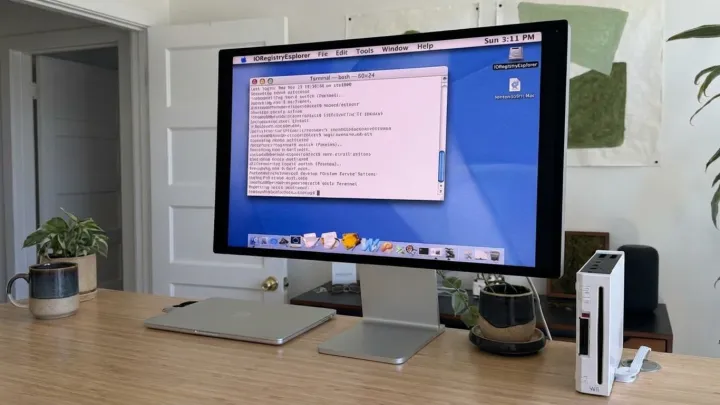
The project leans on low‑level reverse engineering, custom bootloader code, and a careful dance with the Wii’s PowerPC architecture. Rather than simple emulation, the hacker treats the console’s Broadway processor and limited RAM as a constraint‑optimization problem, stripping Mac OS X to a bare, bootable core and rerouting graphics calls through homebrew drivers. File system quirks, memory management overhead, and instruction set edge cases all become part of a slow, methodical entropy reduction process, turning a toy‑branded box into an improbable workstation.
No commercial payoff sits in sight; this is marginal utility measured in curiosity, not revenue. Yet the build echoes the original Mac campaign’s salute to misfits: hardware borders blur, corporate silos look more permeable, and an aging console gains a second, stranger life as a proof of concept that the rules of platforms are rarely as fixed as their makers insist.