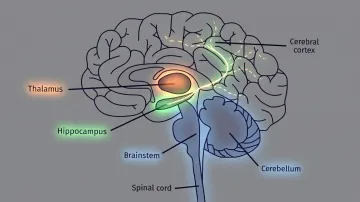
A shared brain “fingerprint” has been identified across five different psychedelic compounds, suggesting that substances with very different chemical structures may converge on a common neural state. The work links classic hallucinogens and newer agents through the same large-scale patterns of activity and disruption in key brain networks.
Using functional magnetic resonance imaging and computational models of functional connectivity, the researchers compared how multiple drugs alter communication among brain regions. Across compounds, they observed increased neural signal diversity, often described as higher entropy, alongside a loosening of the default mode network and stronger coupling between regions that rarely synchronize in everyday waking consciousness.
This recurring signature, or brain fingerprint, appeared even when the drugs targeted different receptors, indicating that receptor pharmacology may be only one layer of explanation. The pattern offers a mechanistic bridge between subjective reports of ego dissolution and objective measures such as network modularity and global integration, and it may help explain why psychedelics show promise in treating depression, addiction and post-traumatic stress.
By isolating a common neural endpoint, the study provides a framework for testing new compounds and refining dose, set and setting in clinical trials. It also raises a deeper question: if distinct molecules can steer the brain into the same high-entropy, hyperconnected landscape, how many different biochemical routes might exist to alter consciousness in precisely targeted ways.