Google bets on AI agents and smart glasses
2026-05-20
Search, not hardware, quietly takes the starring role in Google’s latest reveal, even as a new pair of glasses grabs the spotlight on stage. At its I/O developer conference, the company framed search less as a results page and more as an orchestration layer for autonomous AI agents, positioning everyday users as designers of task‑running systems rather than simple query typists.
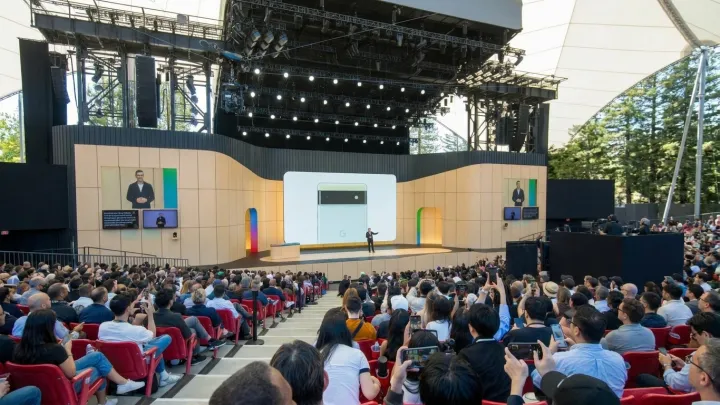
This shift sounds bold, yet it follows a familiar economic script: protect the ad engine by making search feel indispensable while hiding more of the complexity behind generative models and reinforcement learning. Google showed consumers how they could specify goals, constraints and preferences, then let agents operate across services, combining tools like calendars, maps and shopping backends into semi‑autonomous workflows that resemble lightweight robotic process automation rather than simple chatbots.
The return of glasses looks less like nostalgia and more like a bet on persistent context. With cameras, microphones and on‑device neural networks, the frames promise a continuous sensor feed that can ground large language models in real‑world objects and scenes, reducing hallucinations through multimodal input and real‑time environment mapping. Instead of heads‑up notifications, Google pitched the device as a mobile anchor for agents that can see what the wearer sees, identify items, summarize surroundings and trigger actions through a natural‑language interface tied back into its search infrastructure.
Skeptics will argue that Google is late to both wearables and AI assistants, yet the combination of index scale, data center optimization and vertically integrated hardware gives it a cost structure few rivals can match. If consumers accept agents that act on their behalf, the company’s core product quietly shifts from serving blue links to managing intent, with glasses and other devices acting as always‑on terminals for that invisible layer of computation.
Loading...

