Xreal Project Aura bets big on Android XR
2026-05-21
Project Aura does not whisper. It shouts the idea that Android XR should feel like a phone strapped to your vision, not a shy notification layer, and its prototype frames at Google I/O made that ambition uncomfortably clear.
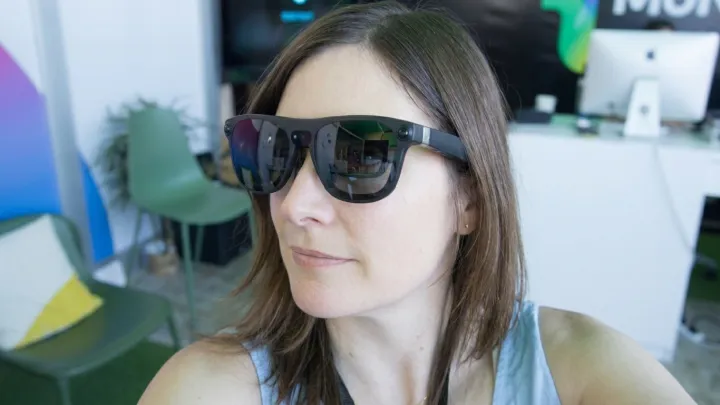
This is a maximalist device. Thick temples hide a full Android stack, with a Qualcomm-class mobile SoC driving binocular micro‑OLED waveguide displays and inside‑out positional tracking. Instead of treating spatial computing as a glanceable overlay, Aura renders full windowed Android apps in a 3D workspace, using six‑degree‑of‑freedom head tracking and inertial measurement fusion to pin interfaces in midair around the wearer.
The strategy feels risky. A dense UI projected across multiple virtual monitors demands sustained vergence‑accommodation compromise and aggressive foveated rendering, while thermal management still depends on passive conduction along the frame. Hand‑tracking and basic controller support sit on top of standard Android XR APIs, yet Xreal layers its own spatial launcher, gesture system, and multi‑window manager, turning Aura into a sort of ultra‑wide desktop for productivity, media, and gaming rather than a lightweight assistive tool.
Power trade‑offs define the experience. Local processing keeps motion‑to‑photon latency low for head‑locked content, but limits battery life and caps GPU headroom for high‑complexity scenes. Cloud‑assisted rendering and offloaded inference are clearly part of the roadmap, hinted at in Xreal’s emphasis on XR‑optimized Android apps that can scale from flat screens to spatial layouts without fragmenting developers’ workflows.
Loading...

