Valve's Steam Machine Meets A DIY RAM Fix
2026-07-10
Silence from Valve’s side of the case says more than any press briefing. The Steam Machine sits on a desk, sold as a living‑room console that just happens to speak PC, yet its memory configuration is locked behind warranty‑baiting screws and proprietary thinking.
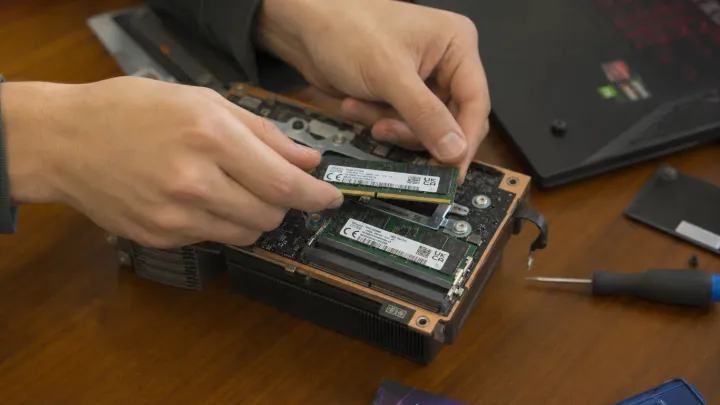
This feels like a design tax on curiosity. Inside, the system rides a modern SoC and a dual‑channel memory controller, but ships with a single stick installed, leaving bandwidth on the table and forcing the integrated GPU to share a cramped pool of system RAM, a choice that throttles frame pacing more than any marketing sheet admits.
So the second stick had to come from a wallet, not from Valve. One user dropped full contemporary pricing on a lone 16GB DDR5 module, chasing dual‑channel throughput and higher effective memory bandwidth, aware that DDR5’s on‑die ECC and power‑management IC are doing real electrical work while the manufacturer shrugs at upgradability.
The odd part is how small the fix is compared with the friction that surrounds it. A carefully matched DIMM restores symmetric channels, eases swap pressure on the NVMe drive, and stabilizes shader compilation hitches, yet the official configuration stays frozen, as if console‑style simplicity matters more than the basic modular promise that made PC gaming worth defending in the first place.
Loading...

