Apple’s Car Failure That Supercharged Its Chips
2026-07-13
Apple’s car project looks like a failure only if you stop at the missing vehicle. Inside the company, the abandoned effort hardened a different product line: the AI blocks now fused into Apple Silicon as the Neural Engine. Work done for autonomy, not phones, set the bar for on‑device inference speed and power draw.
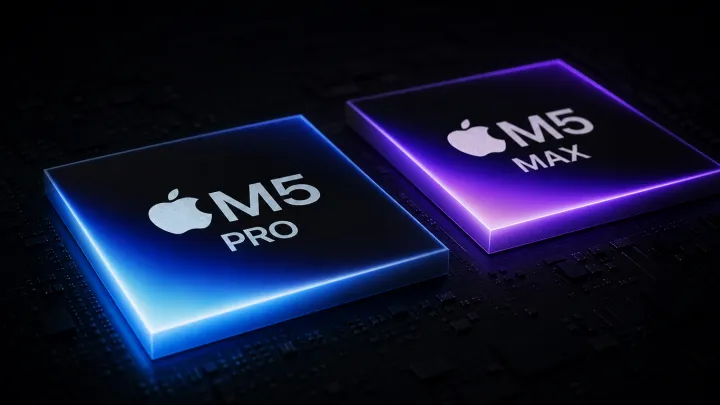
The uncomfortable truth is that self‑driving ambitions forced Apple to build silicon it otherwise would have delayed. High‑bandwidth sensor fusion, real‑time path planning, and massive convolutional neural networks needed low‑latency accelerators, custom interconnects, and aggressive memory hierarchies. Those same design constraints now favor photo classification, speech recognition, and generative models running directly on consumer hardware.
What looks like sunk cost was actually early payment for an AI chip strategy. Data pipelines once tuned for fleets of test vehicles helped shape quantization schemes, sparsity handling, and compiler stacks that feed the Neural Engine today. The car never shipped. The silicon, and the playbook for scaling it across devices, absolutely did.
Loading...

