Galaxy Watch 9 vs Apple Watch 11
2026-07-26
Battery, not sensors, sets the sharpest line between these two fitness flagships. Galaxy Watch 9 stretches to roughly two days of typical mixed use, helped by a larger cell and more aggressive power management in its new Exynos chip, while Apple Watch Series 11 still tends to hover around a single day under similar notification and workout loads.
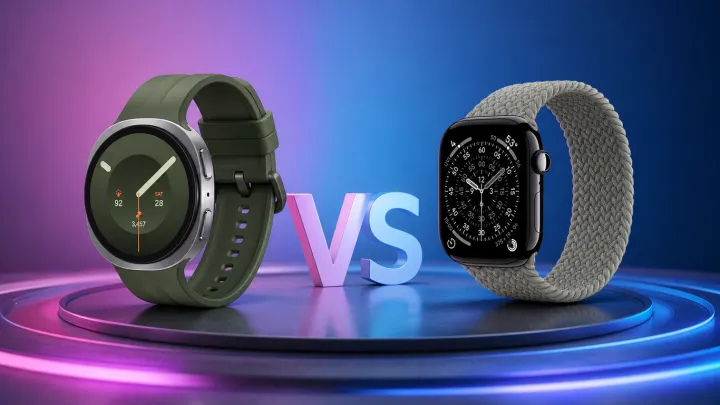
Raw speed swings the same way. Samsung’s latest processor boots apps faster and keeps interface latency low, though Apple’s custom silicon still integrates tightly with watchOS to keep animations smooth and Health data synced with minimal overhead. The fitness story is less lopsided: Apple retains an edge in long‑running metrics such as heart rate variability and VO2 max estimates, backed by mature signal‑processing algorithms and tight coupling with the iPhone Fitness app.
Workout breadth, though, is no longer Apple’s private playground. Galaxy Watch 9 tracks multi‑sport sessions, advanced sleep stages and body composition through bioelectrical impedance analysis, and its GPS lock and dual‑frequency tracking now rival Apple’s for outdoor runs. Where Apple answers is in service integration: rings, Fitness+, and a deep App Store catalogue keep adherence high for users already embedded in the ecosystem, even if they recharge more often to stay in the game.
Loading...

