Fermented Plants As Oral–Gut Precision Tools
2026-08-04
Fermented cabbage in a glass jar may be closer to a medical device than a side dish. A new review argues that kimchi, sauerkraut and other plant ferments can be redesigned as precision tools for oral and gut health, if researchers stop treating them as vague wellness add‑ons and start treating them as programmable microbial systems.
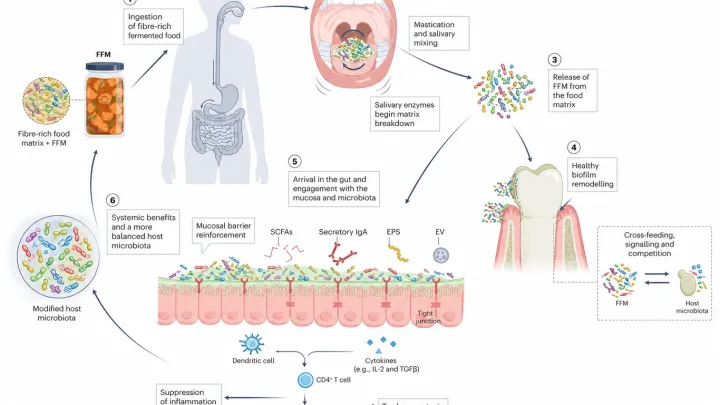
The bolder claim is that these foods already function as crude precision nutrition platforms. Packed into each batch are live lactic acid bacteria, bacteriocins and organic acids that shape biofilm formation on teeth and modulate intestinal barrier integrity through effects on tight junction proteins and mucosal immunity. The review highlights evidence that specific Lactobacillus and Leuconostoc strains can suppress oral pathobionts linked to caries and gingivitis while also shifting gut short‑chain fatty acid profiles in ways associated with metabolic resilience.
What excites researchers is not nostalgia for traditional recipes but the chance to treat a crock of vegetables like a controllable bioreactor. By standardizing starter cultures, cataloguing metabolites with metabolomics and linking those profiles to host responses through metagenomics and immunophenotyping, the authors argue that fermented plants could become low‑cost delivery vehicles for targeted consortia that synchronize oral plaque ecology with gut microbial networks. That would turn a once improvised preservation method into a structured intervention for microbiome‑informed dietary strategies.
Loading...

