Is Cancer A Quantum Disease?
2026-08-27
Cancer looks less like chaos than a rigged game. Instead of infinite variety, tumors appear to push cells into a limited menu of shared states, much as electrons occupy discrete energy levels in quantum mechanics. That analogy is not poetic branding but a response to experimental data mapping gene expression and regulatory networks across many tumor types.
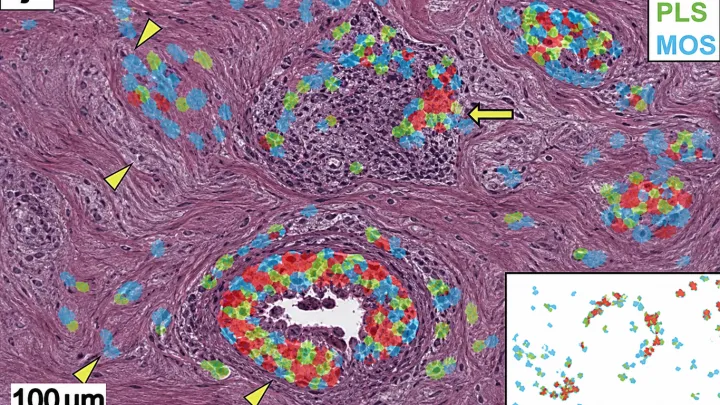
More unsettling is the claim that these states are not optional. Studies of transcriptional regulators and protein interaction networks suggest that oncogenic circuits funnel cells into a few attractor states, stable configurations in phase space that resemble quantized levels rather than a continuum of phenotypes. Cancer cells, for all their mutations, keep falling into the same wells of regulatory energy, as if the system were snapped to rungs on a ladder instead of sliding on a ramp.
From this view, the key variable is not a single mutation but the architecture of the gene regulatory network itself. Andrea Califano, a physicist turned systems biologist, has argued that master regulators form tightly wired modules that define these discrete attractors, and that perturbing one node can trigger non‑linear shifts between states rather than a smooth dose–response. Therapy then becomes an exercise in state control theory: identify the control points, apply minimal targeted inhibition, and force cells out of the malignant basin.
What emerges is a discomforting simplicity. If tumors truly obey a small set of quantized regulatory states, the mystery is no longer whether cancer is random, but why biology built a system so ready to lock into those few, deadly configurations.
Loading...

