AI that listens when horses hurt
2026-09-05
Silence has always biased medicine. Creatures that do not speak are routinely under treated for pain, and horses have paid that price for generations. From Israel now comes a machine that tries to close that gap: an artificial intelligence system trained to read equine agony straight from the face.
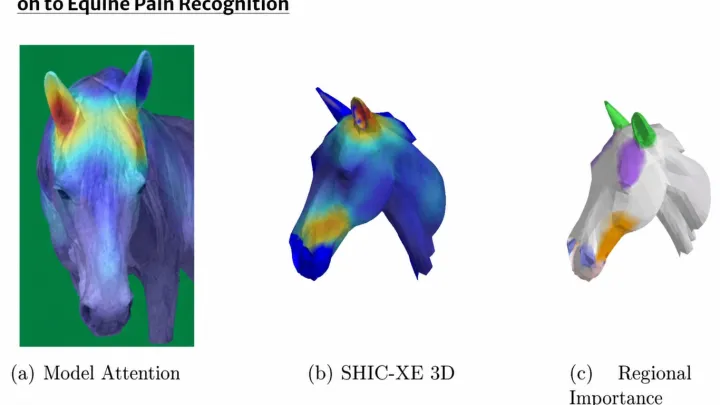
At the center is a computer vision model that behaves less like a black box and more like a hyper patient clinician, parsing micro expressions in the muzzle, eyes, and ears. Using supervised learning on thousands of annotated images, the network learned to match subtle changes in muscle tone to established nociception scores, the same physiological language anesthesiologists use when patients cannot report discomfort.
Skeptics might say this is just another gadget, yet its promise is quietly radical. Veterinary teams struggle with subjective pain scales; this tool instead outputs probabilistic estimates grounded in pattern recognition and signal processing, giving a quantifiable readout where guesswork once stood. That matters in surgery recovery, in chronic lameness, in welfare inspections at stables where a flinch or tightened eyelid can be the only alarm.
Most striking is how the work loops back into human medicine. Techniques first refined on horses, whose facial anatomy is well mapped, can inform algorithms for infants, sedated patients, or people with communication impairments. In a dim stall, a horse’s eye reflecting a camera’s red glow now hints at an unsettling idea: pain may be visible long before anyone chooses to see it.
Loading...

