A Canal Void Learns to Play
2026-09-09
Parks are often too polite. On a disused canal plot in London, a planned playscape garden recasts the community centre as a porous civic commons, not a sealed service box, where play, planting, and informal meeting overlap rather than wait behind doors. The premise bites. Instead of treating outdoor space as leftover amenity, the proposal makes it the operating core: a place whose programme changes with weather, age, season, and the unplanned negotiations of neighbours. That is the point. Its ambition is to replace the timetable of rooms, bookings, and supervised activities with a shared exterior where use is neither fully prescribed nor casually abandoned.
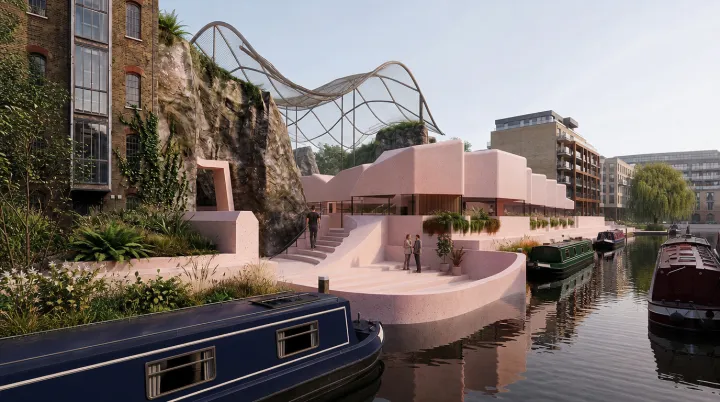
This is no cosmetic repair. Blue-green infrastructure and stormwater attenuation must function as public equipment, moving rain through planted ground while exposing the labor of care rather than hiding it in pipes. Play ecology follows. Children test risk, adults linger, and strangers gain reasons to recognize one another across shared use, without the forced transaction of a ticketed attraction. Control has a cost. For planners, the challenge is to protect safety and access without converting every loose encounter into a rule, a booking, or a revenue line. The wager is hard. A garden claimed by everyone can be drained of life by caution, fencing, or thin maintenance budgets; success lies not in opening-day applause but in allowing mud, noise, repair, and rest to coexist. That is the provocation. At the canal edge, the old boundary becomes a question: what if a public building is best known by the life that refuses to remain inside it?
Loading...

