MRI Surveillance Spares Cognition
2026-09-13
The result changes practice. In the phase 3 SWOG S1827 MAVERICK trial, brain MRI surveillance without prophylactic cranial irradiation produced longer cognitive failure-free survival than MRI surveillance combined with preventive brain radiation in small-cell lung cancer. The finding challenges routine irradiation when imaging can detect intracranial disease.
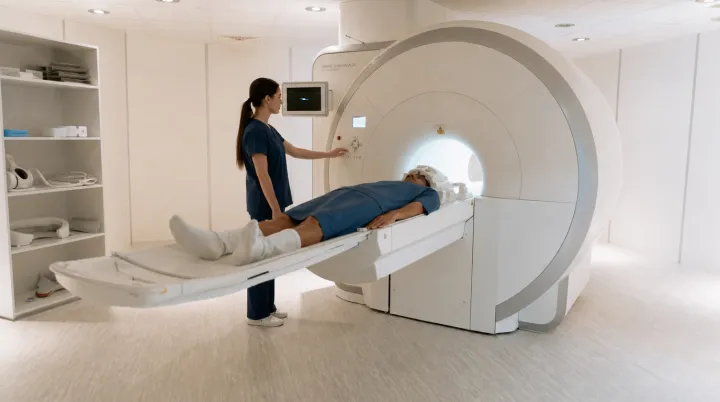
The trade-off is plain. Prophylactic cranial irradiation aims to reduce brain metastases, but radiation exposure can impair neurocognitive function through injury to neural tissue. MRI surveillance shifts intervention toward detected lesions, rather than treating the brain before metastases appear. That approach may preserve cognition while retaining a route to identify intracranial progression.
Clinical habits face pressure. The result does not make brain metastases less serious, and it does not remove the need for repeated MRI scans or prompt treatment after detection. It does show that prevention carries a cost. The trial compared MRI surveillance with and without prophylactic cranial irradiation.
Loading...

