Stress Exposes Cardiac Cell Crosstalk
2026-09-15
A translucent strip of engineered micro-heart tissue tightens, then falters, under controlled stress. That small failure carries a sharp message: hypertrophic cardiomyopathy is not only a cardiomyocyte disorder. In diseased tissue models, fibroblasts and cardiomyocytes exchanged signals that altered how the construct contracted. The cell types were talking. Stress made the conversation harder to ignore.
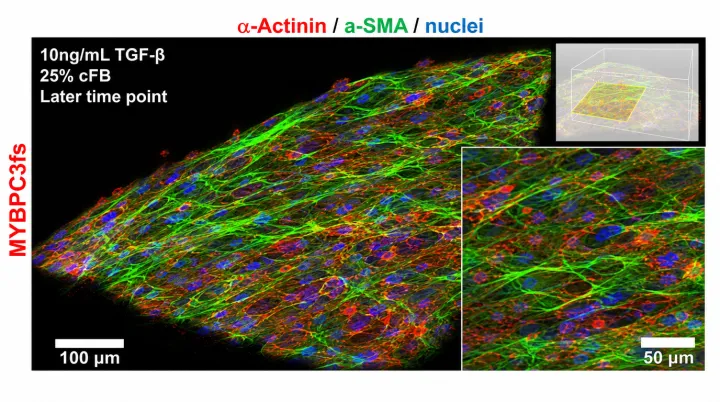
This is a more disruptive finding than it sounds. Hypertrophic cardiomyopathy is often framed through sarcomeres, calcium handling, and the force-generating defects of cardiomyocytes, yet fibroblasts can reshape the terms of failure through extracellular matrix deposition and paracrine signaling. The engineered tissue gave researchers a controllable test bed, where mechanical stress exposed crosstalk that ordinary cell cultures can flatten or miss. Think of fibroblast-cardiomyocyte signaling as a background process in a crowded operating system: it may not generate each heartbeat, but it can redirect the workload until the whole program stutters. This is mechanotransduction, not metaphor.
The therapeutic target may therefore be broader. If stress changes communication between fibroblasts and cardiomyocytes, drugs aimed only at muscle-cell contraction could leave a disease-driving circuit intact. The result is not a treatment claim. It is a demand for models that test cell interactions under load, rather than treating fibrosis as late-stage debris. Build the measurements into closed-loop tissue platforms, and cardiac research could move from reading a damaged signal to intercepting it while it is still being written.
Loading...

