Laser Faults Expose RP2350 Debug Risk
2026-09-20
The lock has a blind spot. A reported laser fault-injection demonstration shows that the RP2350, despite secure boot and ARMv8 TrustZone, can be pushed into a debug state when light disturbs circuitry at a precise instant. This is not a software bug in the usual sense. It is a physical challenge to the boundary between intended execution and transient hardware behavior.
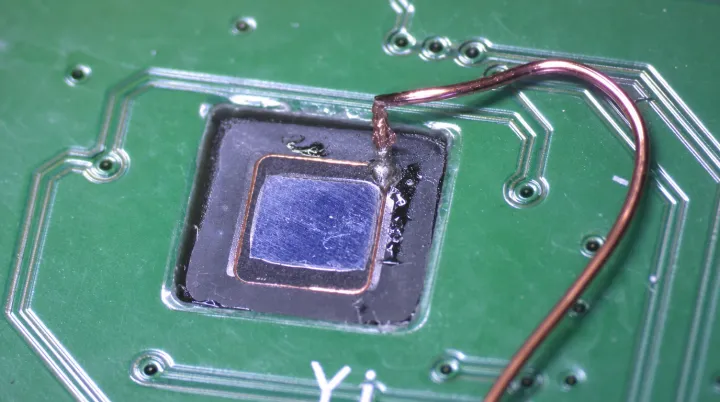
That is unsettling. Secure boot checks whether approved code should run, while TrustZone separates secure and non-secure execution; permanently disabling debug is meant to close another door. Yet a laser can turn silicon itself into the weak link. The laser is not a magic key. Through photocarrier generation, light briefly alters charge behavior in semiconductor structures, like a camera flash confusing one pixel in a sensor, and a security check can misfire. The effect can be fleeting, but a fleeting fault may redirect a decision made by digital logic.
The lesson is sharp. Chip defenses cannot be judged only by firmware features, because fault injection targets timing, state transitions, and physical implementation. The reported work does not erase the RP2350's controls; it exposes assumptions beneath them. Device makers need layered resistance: detect abnormal conditions, limit debug exposure, validate critical transitions, and test against physical attacks. A beam aimed at microscopic circuitry hints at a harder era, where security assurance must survive hostile code and hostile physics alike.
Loading...

