Hemp Hurd Toughens Compostable Film
2026-09-21
Hemp hurd has escaped the compost pile. Korean researchers have turned this coarse agricultural by-product into a reinforcement for biodegradable packaging films, pursuing a plain but stubborn target: plastics that break down after use without tearing too easily during use. The shift matters because disposable film has long faced a trade-off between degradability and mechanical durability.
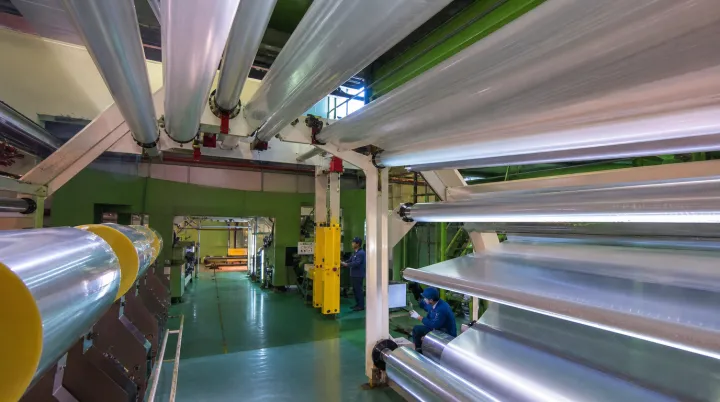
The clever part is structural, not cosmetic. Hemp hurd contains lignocellulosic material, including cellulose and lignin, which can stiffen a biodegradable polymer matrix when dispersion is controlled. The mechanism is stress transfer. In materials science, interfacial adhesion acts like a data bus moving load between components: a well-bonded filler can redirect strain through the matrix instead of letting a small tear race onward. Poor dispersion or weak bonding, however, can create defects and defeat the point.
The commercial opening is larger than a novelty material. Hurd is left behind when hemp stalks are processed, so its use could pair crop-residue management with packaging production. Yet the hard work starts after the lab bench: film makers must tune particle size, moisture content, melt processing, and compostability without sacrificing seal performance. They must also show that added fibers do not disrupt barrier properties or the degradation pathway required by the chosen polymer system. At scale, a by-product could become material intelligence embedded in every wrap.
Loading...

