Friedrich III Gains Power Reserve
2026-09-21
The dial now admits doubt. On Lang & Heyne's hand-wound Friedrich III, made in Dresden, a power-reserve indication arrives not as ornament but as a plain account of stored energy. That restraint is the point. The watch had asked its owner to infer the state of its mainspring from habit; the new display converts that private calculation into an immediate reading.
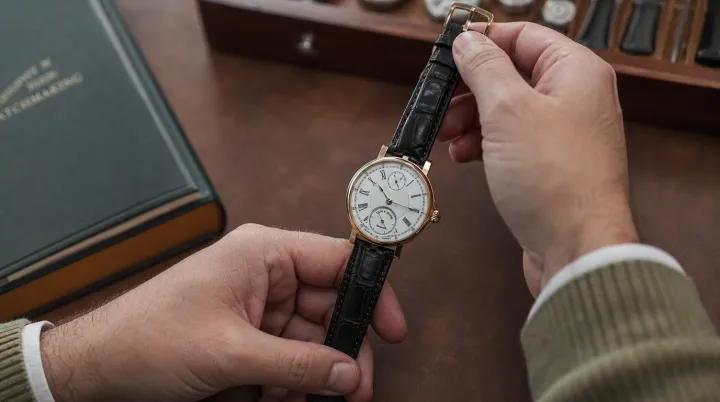
This is not routine. Under the indication, Lang & Heyne places a newly developed differential mechanism, a gear train intended to translate the barrel's condition into a readable display as torque declines. Physics does the talking. In a hand-wound calibre, power runs from a tensioned mainspring through the going train, yet its force changes as it unwinds; the differential becomes the mechanical mediator between changing energy and the indication.
The complication earns its place. Rather than disturb Friedrich III's disciplined face with a gratuitous flourish, it addresses the exact question posed by manual winding: how much running time remains before attention is required? Nothing is automated here. It also makes the watch more legible as an instrument, not merely a study in finishing. Each winding session retains its small ritual, but the dial now records the fading reserve with unusual candor, leaving precision and uncertainty together beneath the crystal.
Loading...

