GLP-1 Drugs May Reshape Chronic Pain
2026-09-24
GLP-1 drugs may alter chronic pain, but the claim is ahead of its proof. The proposed signal runs through the gut microbiome, vagus nerve, immune cells, and metabolic control, rather than through a single analgesic switch. That makes the idea compelling. It also makes causation hard to pin down.
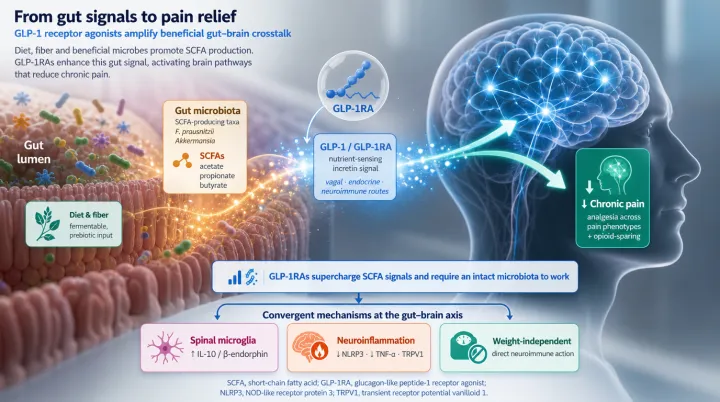
The machinery is intriguing. GLP-1 receptor agonists may retune neuroimmune signaling: microbial metabolites can affect inflammation, while vagal afferents carry gut status toward pain-processing circuits. Think of the gut-brain axis as a distributed operating system, not a painkiller button; immune signaling and neuronal metabolism are its code paths. Weight loss and improved glycemic control may also lower mechanical and inflammatory stress.
Clinical reality is narrower. The strongest human findings concern knee osteoarthritis and headache linked to idiopathic intracranial hypertension, where reduced pressure or load could explain some benefit. Animal work supports anti-inflammatory and sensory effects. Yet no human study has shown that microbiome shifts caused by a GLP-1RA directly relieve pain. The experiment that matters still has not been run.
Loading...

