Fluorescent Probes Put Glucose in View
2026-10-01
The real advance is visibility. A fluorescent signal from molecular probes developed at the University of Bath can turn a hidden glucose swing into a visible event inside living animals, allowing researchers to watch sugar uptake as it happens rather than infer it later from tissue samples, blood measurements, or a single frozen biological snapshot.
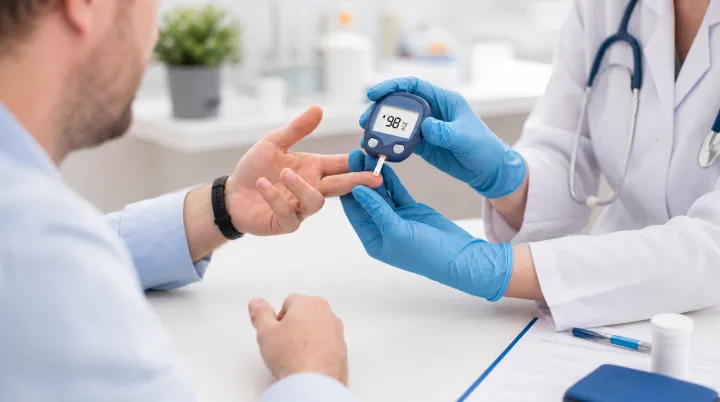
The gain is access. At the level of glucose uptake and cellular metabolism, fluorescence can act like a live system monitor: the molecular probes report changing glucose levels, putting physiological activity on screen without waiting for an endpoint assay. The analogy matters. Rather than ask only where glucose ended up, investigators can follow when and where uptake shifts across the whole organism, a view that may reveal behavior concealed by isolated cells or postmortem tissue.
Disease research gains. Diabetes, cancer, and other metabolic diseases can involve disrupted glucose handling, yet laboratory work often compresses that activity into fixed measurements that cannot show its sequence through a living body. Static tests miss motion. That limitation matters when cells alter fuel use unevenly across organs, where a whole-body reading can show a pattern that a single biopsy cannot. If these signals pair with faster imaging and analysis, whole-animal metabolism could become a continuously readable stream, letting experiments respond while biology is still in motion.
Loading...

