Zing Tests Compact Drone ID Hardware
2026-10-06
Smaller hardware is the real test. Zing is testing NUCODE drone Remote ID modules against size, power-use, and security requirements, where a device that broadcasts identity can no longer be treated as a bolt-on box. The pressure comes from physics: every gram, milliwatt, and cryptographic operation competes with flight time and payload.
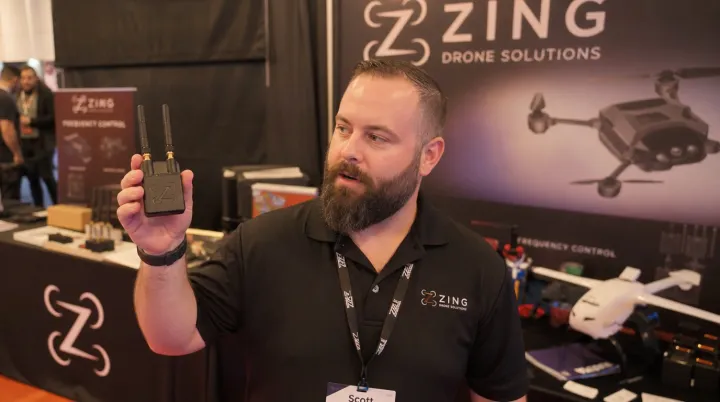
Security deserves equal billing. Remote ID relies on radio-frequency transmission and cryptographic authentication; the first tells nearby receivers who a drone claims to be, while the second seeks to block spoofed identity data. Think of the module as a firewall squeezed into a coin cell: not a literal barrier, but a compact gatekeeper that must verify messages without draining the aircraft battery. Zing's test is less about adding compliance hardware than finding a design that survives operational tradeoffs.
This could matter greatly. A secure Remote ID module that cuts mass and energy draw without weakening authentication could free capacity for sensors, endurance, or payload. Failure leaves compliance as a tax on small aircraft. That would matter beyond rulebooks. Reliable identification could make verified machine identity a background condition of flight, as routine as the link between a vehicle and its control signal. The smallest part may decide which aircraft can carry the most useful work.
Loading...

