A US$3,500 Trifold Phone Test
2026-10-08
US$3,500 buys a spectacle before it buys a phone. Folded shut, the trifold device feels nearer to a slim paperback than a tablet, yet its flexible OLED panel opens into a broad work surface that makes maps, documents, and video seem less cramped. You notice the price first. You notice the weight next.
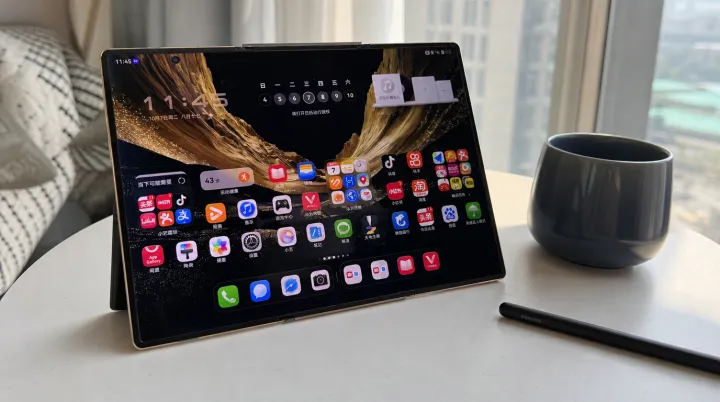
The trick is genuinely useful, not merely theatrical. A dual-hinge mechanism lets the screen bend twice, while display lamination and a protective layer must survive repeated folding without turning touch input into a gamble. You get a large canvas in a pocketable shape. That changes train rides, airport queues, and quick spreadsheet edits. It also creates new rituals: unfold, arrange windows, then fold again before leaving. For people who live inside email, slides, and streaming, the convenience can feel immediate.
Still, this is luxury hardware posing as everyday gear. You are paying for miniaturization, low-volume manufacturing, and a form factor whose practical limits remain plain: folded thickness, exposed screen surfaces, and the anxiety of carrying a costly moving part. Battery capacity and thermal management face harder demands when a phone drives a tablet-sized OLED display. Ask a simpler question. Will you unfold it often enough to justify a premium that could buy a capable phone and a separate tablet? If not, the cleverest hinge in the room is just expensive conversation.
Loading...

