Fewer Sessions, More Bowel Concerns
2026-10-12
Convenience carries a cost. A Korean phase 3 trial suggests that radiation after prostate cancer surgery can involve seven fewer treatments without a significant difference in cancer control, although the shorter course brought more gastrointestinal side effects. The calendar shrinks. Whether that saving outweighs the added bowel burden is a separate question from whether treatment controls the disease.
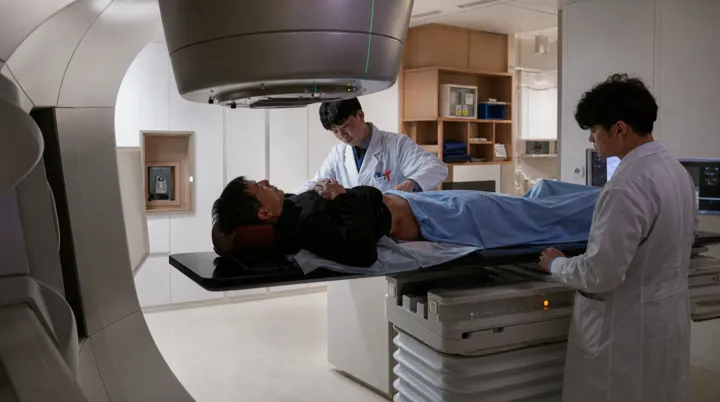
Recurrence needs careful translation. Biochemical recurrence means that prostate-specific antigen, or PSA, rises after surgery, which can signal returning disease before symptoms or visible tumors appear. Radiation targets residual disease. In this setting, salvage radiotherapy aims to control cancer left behind or returning after prostatectomy, while hypofractionation compresses treatment by delivering larger radiation doses per session. Fewer visits matter. They can reduce travel and disruption, but the reported gastrointestinal effects show why treatment convenience cannot stand in for tolerability; the supplied findings do not specify their frequency, severity, or duration.
Statistical reassurance has limits. The absence of a significant cancer-control difference does not, by itself, establish that every patient faces identical outcomes, and the available account provides neither numerical control rates nor enough trial details to judge the precision of that comparison. Decisions need both measures. For patients discussing postoperative radiation, the evidence supports a conversation about fewer appointments alongside bowel risks, rather than treating the shorter schedule as an automatic improvement. The trade-off remains personal. Seven empty appointment slots may look like freedom on a calendar; whether they feel that way depends on what the body must absorb.
Loading...

