Wireless Implants Need Softer Thinking
2026-10-14
Wireless does not mean seamless. An implant can shed its cables yet remain a poor tenant of the body, where every heartbeat and muscle contraction tests whether its materials belong. Softness deserves equal billing. Young's modulus, a measure of stiffness, helps explain why a device that works on a bench may strain surrounding tissue when implanted.
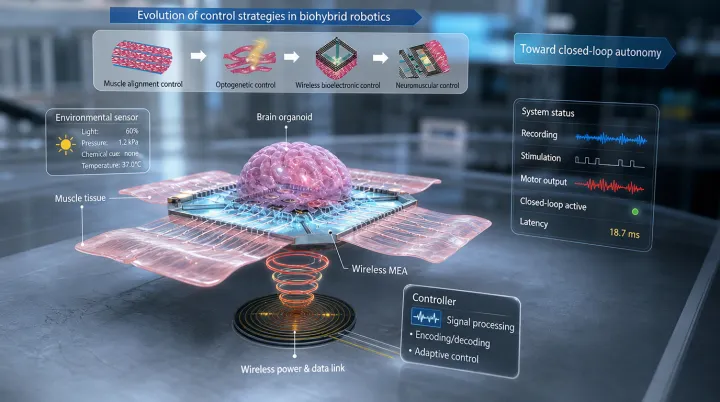
Automation can amplify bad assumptions. When a device adjusts stimulation using signals collected at its interface, inflammation or movement can distort those readings and make the controller respond to an artifact rather than a physiological change. Feedback needs physical honesty. Flexible electrodes and compliant packaging can reduce mechanical mismatch, but their electrical performance, resistance to bodily fluids and durability must be assessed together rather than assigned to separate engineering checklists. Power brings another bargain. Inductive coupling can supply energy without a cable, although coil alignment, implant depth and heating constrain what that freedom buys.
The better implant negotiates limits. A credible development program would test sensing, stimulation, wireless communication and material behavior under repeated motion, while checking whether tissue reactions gradually change the signals on which automation depends. Miniaturization alone proves little. Smaller components may ease implantation, yet shrinking the package can also restrict energy storage and complicate sealing, leaving designers to balance size against operating reliability. Silence must be earned. If an automated implant is to fade from a patient's attention, its control system must recognize unreliable measurements and enter a safe operating state rather than press ahead. Beneath the skin, discretion is not absence; it is machinery learning when to refrain.
Loading...

