Bioko's Malaria Gains Face a Bigger Test
2026-10-18
Success invites a harder test. Equatorial Guinea is expanding its malaria elimination effort, drawing on a strategy that has reduced the disease's burden on Bioko Island, where repeated mosquito control and access to diagnosis and treatment have made prevention a sustained undertaking rather than an occasional emergency response. The island offers evidence, not a guarantee.
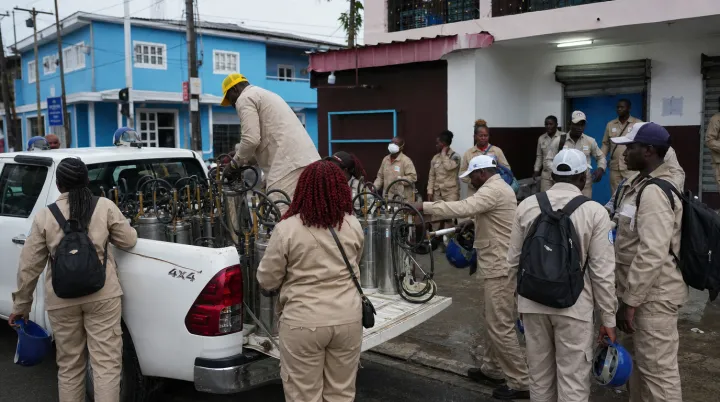
Elimination demands more than suppression. On Bioko, indoor residual spraying targets mosquitoes resting inside homes, while insecticide-treated nets reduce exposure to bites and treatment clears infections that can sustain transmission. These measures work together, because malaria parasites move between human hosts and Anopheles mosquitoes rather than remaining confined to either population. Coverage cannot be decorative. A household missed by spraying, or an infection left untreated, can leave an opening in protection that looks convincing when measured only through averages. Surveillance must therefore distinguish falling illness from interrupted transmission, two achievements that are easily confused but require different standards of proof.
Expansion will test institutional stamina. Extending the approach beyond its island setting means adapting delivery to different communities, mosquito populations and patterns of movement, while keeping supplies, trained staff and reporting systems dependable. Geography changes the arithmetic. Insecticide resistance can weaken mosquito control, and imported infections can complicate efforts even where local transmission has fallen. The practical question is whether the country can preserve the repetition that made Bioko's approach effective without assuming its results will travel unchanged. Success leaves an awkward inheritance: the fewer cases people see, the harder it becomes to defend the work keeping them unseen.
Loading...

