Cancer's Waste Becomes Its Weapon
2026-10-24
Cancer's waste has value. Researchers led by Katsunori Tanaka at Japan's RIKEN Pioneering Research Institute have harnessed carbon monoxide produced by cancer cells to make an anticancer drug, turning a byproduct of cellular metabolism into material for an attack from within. The reversal is striking. What the tumor produces becomes an ingredient in its undoing.
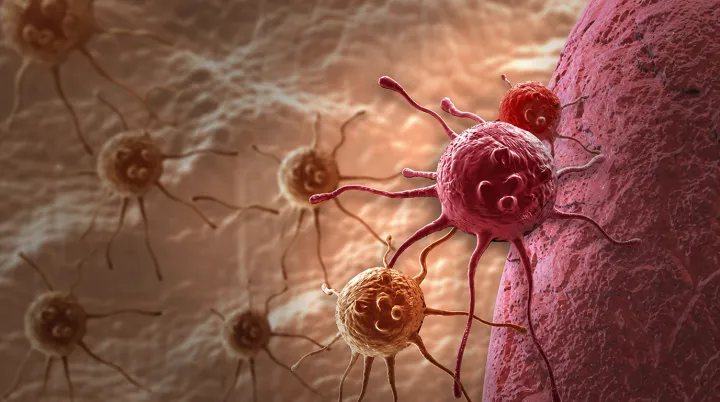
Location changes the proposition. Rather than treating drug manufacture and drug delivery as entirely separate problems, the approach brings chemical synthesis into the biological setting where the treatment is intended to act. Carbon monoxide supplies material. The distinction matters because using a molecule as a chemical building block is different from merely detecting it as a signal, or trying to eliminate it as waste. Metabolism becomes a resource. In this account, the cancer cell is not simply a target awaiting a medicine made elsewhere; its own chemistry helps furnish the means of attack.
Elegance is not efficacy. The reported achievement establishes an inventive route to making an anticancer drug, but the supplied account does not establish patient benefit, clinical safety or superiority over existing treatments. Those questions remain open. Any therapeutic assessment would need to examine how reliably the chemistry works across tumors, whether drug production can be controlled and what happens in healthy tissues, which also have their own metabolism. Selectivity deserves particular scrutiny. The intellectual attraction is nevertheless plain: a tumor's chemical output need not remain an incidental feature of disease when it can instead become part of the treatment. The factory contains its adversary.
Loading...

