Buildings Are Making Room for Robots
2026-10-25
Buildings must bend first. Factories installing wireless chargers and homes widening corridors for robots expose an awkward truth: machines sold for their independence still depend on architecture that accommodates their limitations. The walls have consequences. Before software can deliver reliable movement, the physical route must allow a machine to turn, pass obstacles and reach its charger.
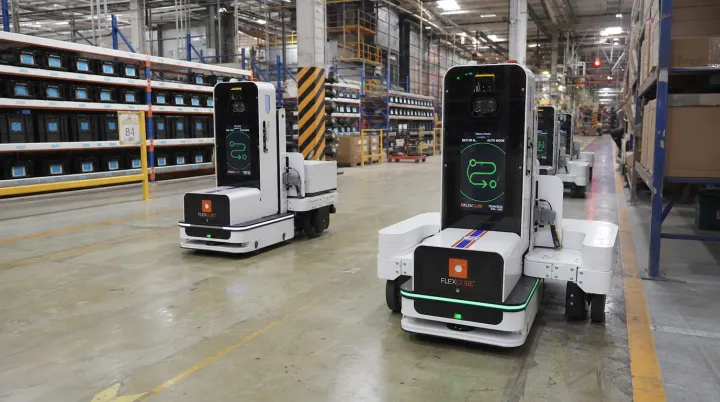
Charging belongs in architecture. Wireless power transfer uses electromagnetic induction, in which a transmitting coil creates a changing magnetic field that induces voltage in a receiving coil. Placement still matters greatly. Alignment, separation and heat affect charging performance, so a factory cannot treat every patch of floor as an interchangeable parking spot. Convenience carries a cost. Charging stations also occupy space, need electrical connections and must remain accessible without obstructing workers or material flows. The apparent disappearance of a cable does not eliminate the engineering; it relocates that work into the building.
Wider is not enough. At home, additional corridor width can accommodate a robot's turning radius, but thresholds, door clearances and furniture placement can still interrupt its route. People retain their claims. A passage designed around machines must also serve residents, including those using wheelchairs or walking aids, rather than merely satisfying a robot's clearance requirements. Retrofitting makes this harder. Moving a wall can consume living space and require structural assessment, while a charging location may compete with everyday household uses. The robot waits silently. Around it, the house must decide how much room independence deserves.
Loading...

